Virtuoso School Of Music and Art

17232 Lancaster hwy. STE 108 Charlotte NC

School office:

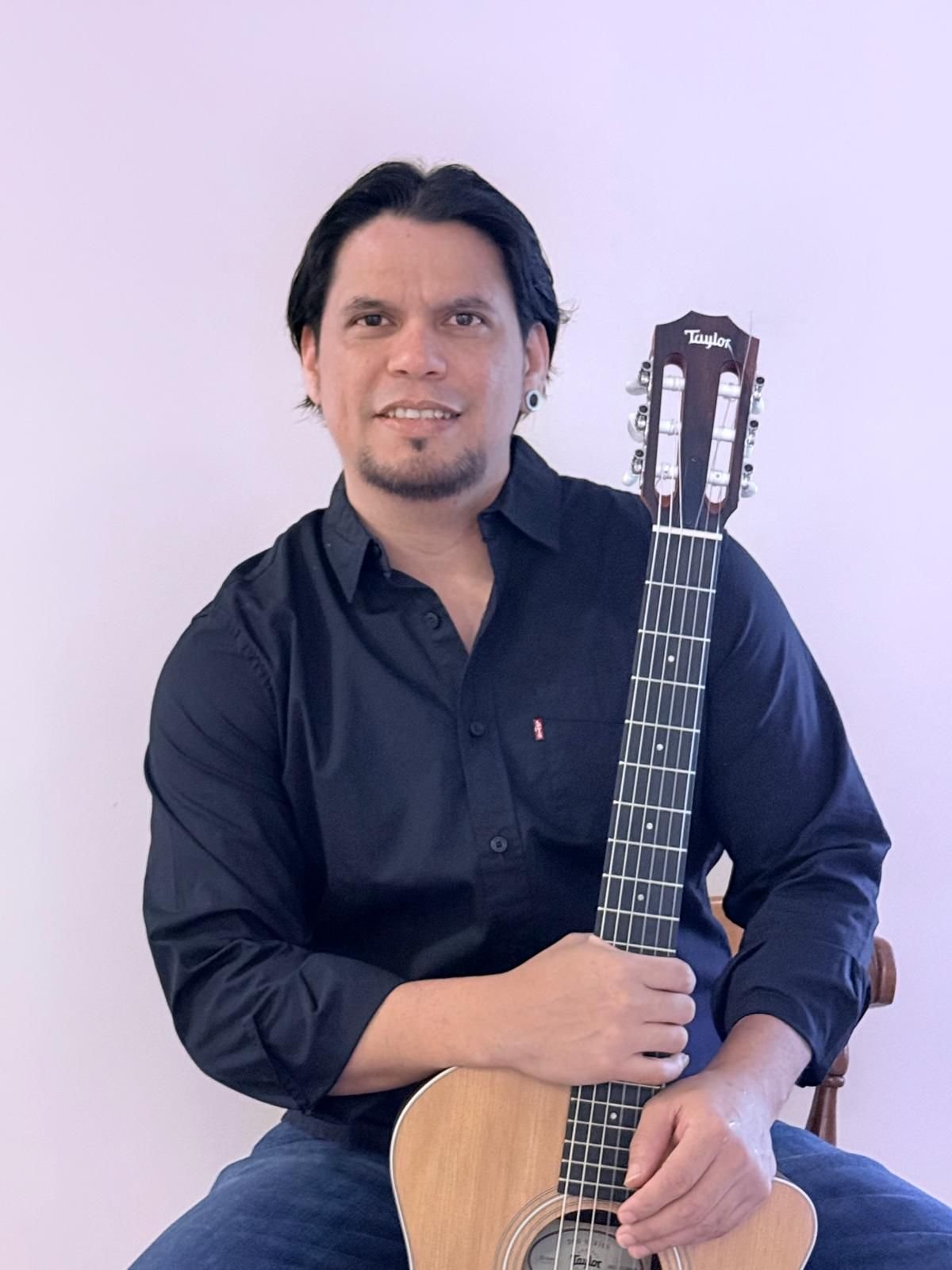
School Director:
Book Your Trial Lesson

Guitar lessons

Guitar lessons at Charlotte NC, Ballantyne
Order a call

GUITAR LESSON

You will find Guitar lessons fascinating and full of fun and pleasure. You can choose lessons according to your level (beginner, intermediate or advanced). Minimum age required – 3 years old. You will be introduced by our accomplished and professional guitar teachers to classical, rock, blues, metal and country styles using electric and acoustic guitars. The course includes cord work, simple songs and melodies, sight reading and theory, everything that will hold you interest.

Skills to gain:

  • Notes and cords reading
  • Acoustic, electric and bass guitar playing
  • Self-confidence and performance skills
  • Accompaniment singing while playing

UKULELE LESSON

Your child seems to start playing the guitar, but you still doubt because of small age? No reasons to worry! We offer a special course that will meet your demands: small size of the instrument, safety while using, supportive and patient teacher, and, about all, your child’s contentment – Ukulele. Trust your little treasure to us and be certain that some time later your child is going to be a real star!

Private lessons

The newcomers can start their studying at any time all year round. Skilled teachers and individual approach to every student are guaranteed.

Private lessons are available on a weekly basis for 30 min., 45 min., or 1-hr duration.  Most beginners will find 30-minute lesson sufficient for the start. 

We provide services:

Our gallery

See what you can learn

Two own Blues compositions by guitar teacher of school Robert McNeely
Guitar Lesson (13 year old)
 
Guitar Lesson – Cameron (4 years old)
Guitar Lesson – Landen (13 year old)
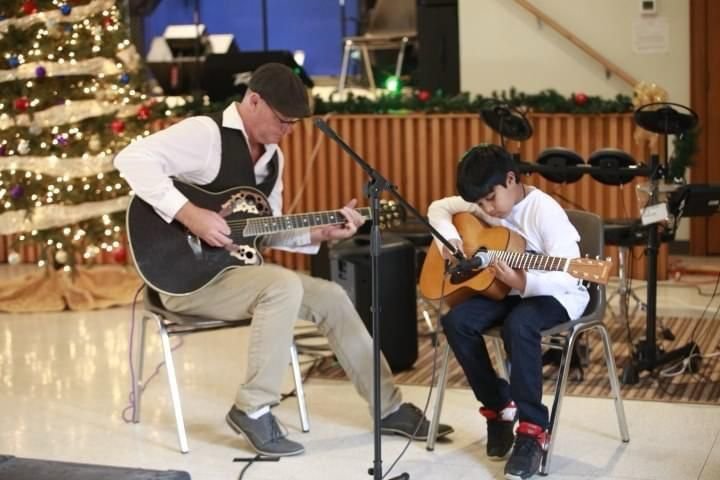
Spring School Recital June 3, 2017 Performance by Guitar teacher Robert McNeely
Gutar Lesson


Our blog

A piano is far more than a musical instrument — it is a marvel of engineering, comprising approximately 12,000 individual parts working in concert to produce the rich, resonant tones that have captivated audiences for centuries. Whether you own a stately grand piano that commands the center of your living room or a reliable upright that has faithfully accompanied your family through generations, proper care and maintenance are essential to preserving its sound quality, playability, and value.

The viola occupies a unique and irreplaceable voice in the string family — warmer and deeper than the violin, more agile and lyrical than the cello. Its rich, burnished tone has captivated composers from Mozart and Brahms to Bartók and Hindemith, and today the viola enjoys a renaissance of appreciation both as a solo instrument and as the harmonic backbone of chamber and orchestral music.

A piano is far more than a musical instrument — it is a marvel of engineering, comprising approximately 12,000 individual parts working in concert to produce the rich, resonant tones that have captivated audiences for centuries. Whether you own a stately grand piano that commands the center of your living room or a reliable upright that has faithfully accompanied your family through generations, proper care and maintenance are essential to preserving its sound quality, playability, and value.

Master saxophone maintenance and care techniques. Complete guide covering daily cleaning, reed care, seasonal adjustments, storage, troubleshooting, and professional repairs for all skill levels.

Master flute maintenance and care techniques. Complete guide covering daily cleaning, seasonal adjustments, storage, troubleshooting, and professional repairs for all skill levels.

Learn professional clarinet care techniques. Complete maintenance guide covering daily cleaning, seasonal adjustments, winter storage, and troubleshooting for all player levels.

Spring is here, and it’s the perfect time for your kids to explore their artistic and musical talents! Join us for our special Easter-themed music, dance, and art lessons!

Unleash your imagination, explore various mediums, and let our expert instructors guide you on a visual journey of self-expression.

Music training ,music lessons has a remarkable impact on the anatomical level of the developing brain in children. Research has shown that engaging in musical activities at a young age can lead to significant structural changes, shaping the brain in unique and beneficial ways

Music lessons, Dance lessons, Art class! Home Music lessons, Dance lessons, Art class 🎸We strongly believe that Music, Art, and Dance classes are more than just hobbies – they are essential for your child's growth and development.🎶By continuing your child's…

Dance class for kids! Home Lessons Dance Lessons Dance Class for Kids https://virtuososchoolofmusicandart.com/wp-content/uploads/2023/11/Видео-WhatsApp-2023-11-25-в-14.59.04_03f6c45b.mp4💃Dance class is a form of artistic expression involving rhythmic movement of the body. It can take various forms, such as ballet, hip-hop, salsa, or contemporary dance.🕺The benefits…

Art class! Home Art class https://virtuososchoolofmusicandart.com/wp-content/uploads/2023/11/Видео-WhatsApp-2023-11-25-в-14.49.19_c9b9a169.mp4🎨Art class for kids is a wonderful opportunity for young minds to explore their creativity and express themselves through various artistic mediums. It can encompass a wide range of activities such as painting, drawing, sculpting,…

Beginner’s questions

How to remember & learn guitar chords?

Start with basic open chords (C, G, D, Em, Am) and practice transitioning between them daily. Use the "chord a day" method, group chords by shape families, and create visual associations. Practice chord progressions used in actual songs rather than isolated chords. Muscle memory develops through consistent repetition. Our Charlotte guitar instructors teach proven memorization techniques that make chord learning faster and more enjoyable.

How to learn guitar tabs?

Guitar tablature (tabs) shows six lines representing strings, with numbers indicating which fret to play. The bottom line is the lowest/thickest string. Start with simple single-note melodies before progressing to full songs. Learn rhythm notation alongside tabs for timing. While tabs are easier than traditional notation initially, combining both gives you the most musical versatility.

How to remember & learn guitar notes?

Learn the notes on the low E and A strings first, as these are foundations for barre chords and scales. Use the octave shapes to find the same notes across different strings. Practice scales while saying note names aloud. The notes repeat after the 12th fret. Regular practice with a teacher at our Charlotte location ensures you develop this crucial skill efficiently.

How to learn guitar for beginners?

Begin with proper posture and hand positioning, learn to tune your guitar, and start with basic open chords. Practice simple strumming patterns and develop calluses gradually with 15-20 minute daily sessions. Choose an acoustic or electric guitar based on your musical preferences. Virtuoso School in Charlotte offers beginner-friendly guitar lessons that make the learning curve enjoyable and sustainable.

How to learn guitar as a bassist?

Guitar will feel familiar since both instruments share similar fretboard layouts and music theory concepts. You'll need to adjust to thinner strings, different finger techniques, and playing chords rather than single-note basslines. Your rhythm foundation as a bassist is a huge advantage. Focus on chord voicings, strumming patterns, and melodic playing. The transition is easier than learning from scratch.

How to learn guitar as a piano player?

Your music theory knowledge and note-reading skills transfer directly to guitar. However, you'll need to adapt to different chord voicings, learn how the fretboard is organized, and develop new finger calluses. Piano players often excel at understanding harmony on guitar but need to practice the physical technique. Your ability to read music gives you an advantage over many guitar beginners.

How to learn guitar without a guitar?

Study music theory, watch tutorial videos, practice finger exercises and chord shapes in the air, learn to read tabs and standard notation, and use guitar simulation apps. However, actual practice on a real instrument is essential for developing calluses, muscle memory, and sound production. Consider borrowing a guitar or investing in an affordable starter model.

How to play guitar solo?

Start by learning pentatonic scales, which are the foundation of most guitar solos. Practice bending, sliding, hammer-ons, and pull-offs. Learn solos from your favorite songs note-by-note, then analyze what makes them work. Develop phrasing by thinking melodically rather than just playing scales. Our Charlotte guitar instructors specialize in helping students develop their soloing skills and personal style.

How to learn guitar songs?

Break songs into sections (intro, verse, chorus, bridge) and learn each part separately. Start with songs that use chords you already know. Use tabs or chord charts combined with listening to the original recording. Slow down difficult sections using apps or software. Practice transitioning between sections smoothly. Choose songs you're passionate about to maintain motivation.