Virtuoso School Of Music and Art
17232 Lancaster hwy. STE 108 Charlotte NC
School office:
School Director:
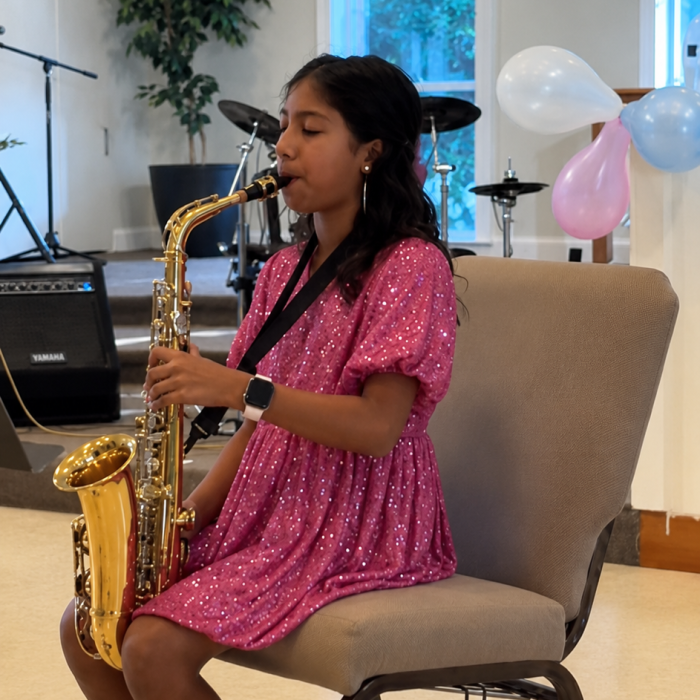
How to learn saxophone for beginners?
Start with proper assembly, reed preparation, and embouchure formation. Learn correct hand positioning and posture (sitting or standing). Begin with long tones on middle register notes to develop tone quality and breath support. Alto saxophone is typically recommended for beginners. Practice regularly with a method book and learn to read music notation. Our Charlotte saxophone instructors help beginners establish proper technique and avoid common pitfalls.
How to learn saxophone notes?
Saxophone fingering is relatively straightforward with a logical pattern. Learn the chromatic scale and major scales in all keys. The saxophone is a transposing instrument (alto and baritone in Eb, tenor and soprano in Bb), so concert pitch differs from written notes. Start with notes in the middle register, then add low notes and altissimo. Practice with a fingering chart until positions become automatic.
Saxophone notes for beginners
Beginners should start with notes from low B-flat to high F, which covers about two octaves in the mid-range of the instrument. These notes use the most straightforward fingerings and are easiest to produce with good tone quality. Master these before attempting altissimo notes (high range) or palm keys. Learn corresponding note names on the staff and practice scales using these foundational notes.
How to play saxophone notes?
Saxophone notes are played by covering tone holes with keys while maintaining proper embouchure and air support. The octave key allows you to play the same fingerings in higher registers. Smooth transitions require coordinating finger movement, air speed, and embouchure adjustments. Practice scales slowly to develop clean fingering technique. Use a tuner to ensure accurate intonation as you learn each note.
How to learn saxophone fast?
Practice daily, even if only 20-30 minutes, focusing on fundamentals like tone production, breath support, and finger technique. Work with a qualified teacher who can correct mistakes immediately. Use a metronome to develop timing. Record yourself to identify areas needing improvement. Set specific, measurable goals. Learn songs you love to stay motivated. While mastery takes time, efficient practice methods significantly accelerate progress.
How to learn saxophone quietly?
Use a practice mute that fits into the bell, reducing volume significantly. Practice during reasonable hours and communicate with neighbors. Work on fingering exercises without blowing or with minimal air. Use saxophone learning apps for silent fingering practice. Practice breathing exercises and embouchure development without the instrument. Consider renting practice space or using soundproofing in your Charlotte home practice area.
How to learn saxophone step by step?
Step 1: Learn proper assembly and reed preparation. Step 2: Develop correct embouchure and produce first sounds. Step 3: Learn basic fingerings and play simple scales. Step 4: Read music notation and rhythm. Step 5: Practice long tones for tone development. Step 6: Learn simple songs and exercises. Step 7: Expand range and technical skills. Step 8: Study different musical styles. Our structured Charlotte saxophone program guides you through each step systematically.
Awarded as one of the best schools in Charlotte, NC

Exam preparation for Trinity College London and ABRSM

Music, Dance, and Art lessons all in one place
University-trained teachers with degrees only

Exclusive to our school: patented program School Of Little Talents

Preparation for future studies at Universities and Conservatories