Virtuoso School Of Music and Art

17232 Lancaster hwy. STE 108 Charlotte NC

School office:

School Director:
Comprehensive Guide to Flute Care and Maintenance

Contents

Proper flute care is essential for maintaining excellent sound quality, mechanical precision, and instrument longevity. Whether you’re a beginner, amateur musician, or professional performer, developing consistent maintenance habits will keep your flute performing reliably for many years. This comprehensive guide covers everything from daily cleaning routines to seasonal adjustments, storage best practices, and professional maintenance strategies.

1. Understanding Your Flute: Components and Structure

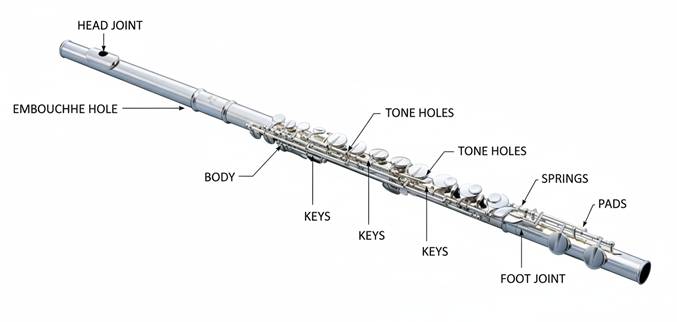
Before implementing a care routine, it’s important to understand the key components of your flute and their functions.

1.1 Main Components

Component

Function

Sensitivity to Moisture

Head Joint

Contains embouchure hole; affects tone quality and intonation

Very High

Body

Houses most tone holes and keys; core of instrument

High

Foot Joint

Contains lower keys; affects lower register response

High

Keys & Springs

Control tone hole opening; enable extended range

High

Pads

Seal tone holes; critical for proper air-tightness

Very High

Tenons (Cork rings)

Connect joints; require lubrication

Medium

Tone Holes

Allow air passage; must be clean and unrestricted

High

1.2 Material Considerations

Silver-Plated Flutes:

  • More responsive to temperature changes
  • Prone to tarnishing
  • Require regular polishing
  • Excellent tonal response
  • Require careful moisture management

Gold/Platinum-Plated Flutes:

  • More stable and durable
  • Less tarnishing
  • Premium instruments requiring expert maintenance

Solid Silver Flutes:

  • High maintenance
  • Best professional-level maintenance
  • Tonal warmth and depth

Nickel-Silver Flutes:

  • More affordable
  • Still require careful maintenance
  • Good for beginners and students

2. Daily Flute Maintenance Routine

2.1 After Every Playing Session

Essential Tasks:

Remove moisture immediately

  • Pass cleaning rod with silk swab through all sections
  • Don’t leave moisture inside the flute
  • Moisture causes pad deterioration and mold growth

Clean the embouchure hole

  • Use a soft cloth to gently wipe the embouchure
  • Remove saliva and residue
  • Never use abrasive materials

Wipe exterior surfaces

  • Use soft, lint-free cloth
  • Remove fingerprints and oils
  • Prevents tarnishing (especially silver flutes)

Disassemble properly

  • Gently separate head joint, body, and foot joint
  • Never force connections
  • Allow all parts to air dry slightly

Inspect pads briefly

  • Check if pads are sealing properly
  • Look for visible damage or displacement

2.2 Deep Cleaning (Weekly)

Supplies Needed:

  • Cleaning rod with silk swab
  • Soft mouthpiece brush
  • Lint-free cloth
  • Mild soap and lukewarm water
  • Cork grease (if needed)

Procedure:

  1. Disassemble all three sections
  2. Run cleaning swab through each section separately
  3. Clean embouchure hole with gentle pressure
  4. Wipe all exterior surfaces thoroughly
  5. Check tone holes for any visible blockage
  6. Allow 30 minutes drying time before reassembly
  7. Store in protective case

3. Head Joint and Embouchure Care

The head joint is the most critical component for tone quality and requires specialized care.

3.1 Regular Head Joint Maintenance

Monthly Cleaning:

Internal cleaning

  • Use cleaning rod with fresh silk swab
  • Run through bore multiple times
  • Replace swab if it becomes visibly dirty

Embouchure hole inspection

  • Check for deposits or buildup
  • Clean gently with soft cloth
  • Never use harsh chemicals

Cork integrity check

  • Inspect cork for cracks or deterioration
  • Feel for proper seal
  • Note any air leaks

Troubleshooting:

Issue

Cause

Solution

Tarnish inside head joint

Moisture + oxygen

Increase drying time, use swab more frequently

Difficulty reassembling

Cork too dry or swollen

Apply cork grease sparingly

Moisture inside bore

Inadequate drying

Use longer swab, allow more air circulation

Squeaks or cracks in tone

Moisture in bore

Extend drying time before playing

3.2 Cork Care

Cork Maintenance:

  • Apply cork grease only when necessary (2-4 times per year)
  • Use small amount on a clean cloth
  • Wipe cork gently—don’t over-grease
  • Over-greasing causes dirt accumulation
  • Replace cork if cracked or severely worn

4. Cleaning and Caring for Body and Foot Joint

4.1 Body Section Care

Key Maintenance Areas:

Area

Maintenance

Frequency

Tone Holes

Check for blockage; clean if needed

Weekly

Key Pivots

Inspect for smooth operation

Monthly

Springs

Verify springiness; check for bends

Monthly

Pad Sealing

Test by covering hole and checking airflow

Monthly

Body Exterior

Wipe clean; polish if needed

After each use

4.2 Proper Cleaning Technique

Tone Hole Cleaning:

Visual inspection

  • Check for visible dust or debris
  • Look for white deposits (mineral buildup)

Gentle cleaning

  • Use soft pipe cleaner if blockage exists
  • Never insert hard objects
  • Avoid damaging hole edges

Moisture removal

  • Pass cleaning rod through each hole carefully
  • Ensure complete dryness

4.3 Foot Joint Maintenance

Critical Areas:

Low B and C keys

  • Most complex mechanism
  • Requires careful inspection
  • Must operate smoothly

Spring tension

  • Check that keys return properly
  • Springs should be responsive
  • No sluggish movements

Pad condition

  • Pads here wear quickly
  • Replacement needed when darkened
  • Deteriorated pads cause air leaks

5. Key Mechanism and Spring Care

5.1 Key Operation Best Practices

Proper Handling:

Never force keys

  • Apply gentle, even pressure
  • Avoid jabbing or pounding

Keep keys clean

  • Wipe after each use
  • Remove oils and moisture
  • Prevents sticking

Lubrication protocol

  • Use key oil sparingly (1-2 drops per axis)
  • Apply only to pivot points
  • Excess oil attracts dust

Spring maintenance

  • Check tension regularly
  • Verify smooth operation
  • Listen for squeaking

5.2 Key Problems and Solutions

Problem

Cause

Prevention

Sluggish keys

Dust/oil accumulation

Regular cleaning, minimal oil

Squeaking when operating

Moisture + friction

Dry keys thoroughly after use

Stuck key

Moisture, corrosion, or debris

Keep keys dry, clean regularly

Unresponsive spring

Bent or fatigued spring

Avoid excessive force

Rattling key

Loose screw or misalignment

Check hardware, seek professional help

5.3 When to Seek Professional Help

Seek professional repair when:

Spring is bent or broken

Key won’t return to position

Persistent squeaking despite cleaning

Key alignment is visibly off

Hardware is loose and turning

6. Pad Maintenance and Replacement

Pads are the most critical wear components and significantly impact playability.

6.1 Understanding Pad Wear

Stages of Pad Deterioration:

Stage

Signs

Action

Excellent

Whitish color, firm feel

Continue normal maintenance

Good

Light gray discoloration

Monitor closely

Fair

Medium gray, slightly soft

Plan replacement

Poor

Dark gray/brown, spongy feel

Replace soon

Failed

Black, hard or crumbling, leaking air

Replace immediately

6.2 Pad Care Best Practices

Maximizing Pad Lifespan:

Keep pads dry

  • Moisture is the primary enemy
  • Use cleaning swab immediately after playing
  • Store in dry environment

Avoid excess pressure

  • Don’t force keys closed
  • Excessive pressure accelerates pad wear
  • Play with natural finger weight

Regular inspection

  • Check pads monthly
  • Listen for air leaks
  • Note any color changes

Professional cleaning

  • Technician can remove debris without damage
  • Extend pad life by 6-12 months
  • Recommended annually

6.3 Pad Replacement Timeline

Typical Replacement Needs:

  • Hobbyist players: Every 3-5 years
  • Regular players: Every 1-2 years
  • Professional/heavy use: Every 6-12 months
  • After humidity exposure: Sooner

Professional pad replacement cost: $300-800 (depending on extent)

7. Storage and Environmental Control

7.1 Optimal Storage Conditions

Temperature and Humidity:

Factor

Optimal Range

Why Important

Humidity

40-60% RH

Prevents wood cracking, pad deterioration

Temperature

18-22°C (64-72°F)

Minimizes material stress

Stability

Minimal fluctuation

Sudden changes cause damage

Light

Low-light environment

Prevents tarnishing, UV damage

7.2 Storage Best Practices

Proper Storage Setup:

Hard protective case required

  • Provides impact protection
  • Maintains stable environment
  • Protects from dust

Case interior conditions

  • Ensure good ventilation
  • Avoid sealed cases (moisture trap)
  • Use humidity regulators if needed

Never leave flute assembled

  • Disassemble after playing
  • Air circulation prevents moisture
  • Reduces pad pressure

Flute positioning

  • Store in case designed for flute
  • Parts held securely
  • No unnecessary stress

Location selection

  • Stable temperature environment
  • Avoid bathrooms (humidity spikes)
  • Away from heating vents
  • Away from direct sunlight

7.3 Long-Term Storage (3+ months)

Extended Storage Checklist:

Deep cleaning before storage

  • Clean all components thoroughly
  • Ensure complete dryness (48 hours)
  • Polish exterior surfaces

Humidity control

  • Place silica gel packets in case
  • Monitor moisture levels
  • Replace packets if saturated

Monthly monitoring

  • Check case condition
  • Verify no moisture buildup
  • Inspect for mold signs

Reassembly test

  • Before resuming play, test assembly
  • Verify smooth operation
  • Check key function

8. Seasonal Care Adjustments

8.1 Winter Care

Cold Weather Challenges:

Challenge

Impact

Solution

Low humidity

Wood cracks, pads become brittle

Use room humidifier (45-55% RH)

Rapid temperature changes

Internal stress, air leaks

Gradual warming in closed case

Condensation when entering warmth

Moisture accumulation, pad damage

Allow 15-20 minutes adjustment time

Winter Maintenance Protocol:

Before playing

  • Allow 20 minutes warmup in case
  • Bring flute from cold to room temperature gradually
  • Never play immediately after bringing indoors

During practice

  • Dry more frequently (every 5-10 minutes)
  • Use fresh swab each session
  • Extended drying after practice

After playing

  • Extended moisture removal (30+ minutes)
  • Store in humidity-controlled case
  • Verify all moisture is removed

8.2 Summer Care

Warm Weather Challenges:

Challenge

Impact

Solution

High humidity

Pads soften, mold growth, sluggish keys

Use dehumidifier/silica gel in case

Heat exposure

Material warping, pad hardening

Keep away from direct sun, AC vents

Moisture accumulation

Pad deterioration accelerated

More frequent cleaning, extended drying

Summer Maintenance Protocol:

Environmental control

  • Maintain 40-60% humidity
  • Use silica gel in storage case
  • Avoid leaving in vehicles or direct sun

Enhanced cleaning

  • Clean more frequently (every 2-3 days)
  • Use fresh swabs each session
  • Extended drying times (45+ minutes)

Monitoring

  • Watch for mold inside case
  • Inspect pads for softening
  • Test key responsiveness

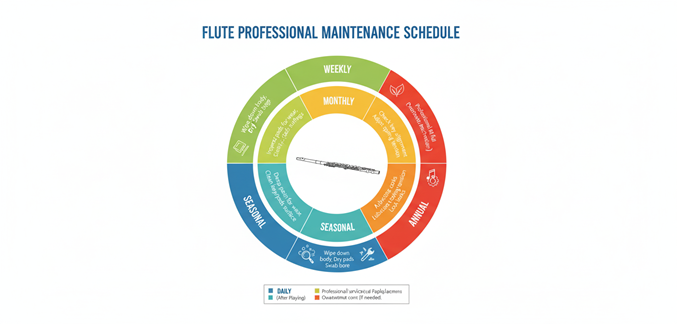
9. Maintenance Checklist and Schedule

9.1 Daily Routine (After Every Playing Session)

Time Required: 5-10 minutes

Run cleaning rod with silk swab through all sections

Wipe embouchure hole gently

Clean flute exterior with soft cloth

Disassemble (head joint, body, foot joint)

Allow all parts to air dry 10-15 minutes

Inspect pads briefly for leaks

Reassemble and store in case

9.2 Weekly Deep Cleaning

Time Required: 15-20 minutes

Perform all daily tasks

Use fresh cleaning rod

Clean with mild soap and lukewarm water (optional)

Inspect all tone holes

Check key mechanism operation

Verify spring tension and response

Allow 30 minutes total drying time

9.3 Monthly Maintenance

Time Required: 30-45 minutes

Complete weekly cleaning

Detailed pad inspection (check color, firmness)

Test each key for sticking or squeaking

Inspect cork for damage

Check for visible tarnishing (silver flutes)

Verify all springs return properly

Test air-tightness of each pad

9.4 Seasonal Adjustment (Spring/Fall)

Time Required: 1 hour

Complete monthly maintenance

Adjust environmental conditions

Apply cork grease if needed

Polish exterior (if tarnished)

Extended humidity inspection

Consider professional cleaning

9.5 Annual Professional Maintenance

Time Required: 2-4 hours (professional)

Recommended services:

Professional pad cleaning

Complete key adjustment and alignment

Spring tension verification and adjustment

Cork replacement (if needed)

Complete moisture inspection

Professional polishing

Pad replacement (if wear visible)

Cost: $150-400 depending on extent

10. Troubleshooting Common Flute Problems

10.1 Sound Quality Issues

Problem

Likely Cause

Solution

Squeaking in high register

Moisture in bore OR leaking pad

Dry thoroughly, test pad sealing

Difficulty playing certain notes

Moisture blockage OR stuck key

Use cleaning rod in tone holes, check key springs

Tone sounds dull or muffled

Pad leakage OR moisture

Check pad sealing, extensive drying

Cracks in tone quality

Inconsistent air OR pad issue

Test embouchure control, inspect pads

Notes won't respond/delayed response

Sluggish keys OR stuck pads

Clean keys thoroughly, oil sparingly

10.2 Mechanical Problems

Problem

Likely Cause

DIY Solution

Stuck key

Moisture/corrosion

Clean thoroughly, light oil

Key won't spring back

Broken spring OR stuck axis

Seek professional help

Rattling sound when playing

Loose component OR misaligned key

Check for bent keys, loose hardware

Squeaking when operating keys

Moisture + friction

Dry keys, apply minimal oil

Sluggish response

Dirt/old oil accumulation

Deep clean, fresh minimal oil

10.3 When to Call a Professional

Seek professional repair if:

Spring is bent or broken – Can’t be fixed at home

Key won’t return after repair attempts – Needs alignment

Persistent leaking pad despite cleaning – Needs seating or replacement

Cork is cracked or deteriorated – Needs replacement

Multiple keys malfunction – Needs professional inspection

Strange noises despite cleaning – Possible hidden damage

11. Advanced Care Topics

11.1 Polishing Silver Flutes

Silver Tarnish Prevention:

Monthly Maintenance:

Wipe after each use with soft cloth

Store in anti-tarnish pouch if available

Reduce moisture exposure

Annual Deep Polishing:

Use silver polish designed for instruments

Never use harsh chemicals

Gentle rubbing motion

Professional polishing recommended every 2-3 years

11.2 Traveling with Your Flute

Travel Protection Checklist:

Protective case

  • Use hard case, not soft gig bag
  • Ensure cushioning on all sides
  • Consider flight case for air travel

Climate adaptation

  • Allow 30-45 minutes adjustment time
  • When moving between temperature zones
  • Before unpacking in new environment

Humidity management

  • Bring silica gel packets
  • Monitor case moisture
  • Dry more frequently in new environments

Testing

  • Test function upon arrival
  • Verify key operation
  • Check pad sealing
  • Identify any damage immediately

11.3 Maintenance for Different Flute Materials

Silver-Plated Flutes:

  • Regular polishing (monthly)
  • Tarnish prevention essential
  • Professional polishing annually
  • Enhanced moisture protection

Solid Silver Flutes:

  • Premium maintenance required
  • Professional service highly recommended
  • Aggressive polishing can damage plating
  • Consider professional membership program

Nickel-Silver Flutes:

  • Less prone to tarnishing
  • Still requires regular cleaning
  • More forgiving of moisture
  • Standard maintenance sufficient

12. Frequently Asked Questions

How often should I have my flute professionally serviced?

Most players benefit from annual professional maintenance. Heavy players (2+ hours daily) should increase to every 6-8 months. Beginners can extend to every 1-2 years if maintaining excellent daily habits.

Can moisture damage inside the flute be fixed?

Minor moisture damage usually resolves with extended drying. Persistent issues may require professional cleaning. Water damage to pads is often irreversible and requires pad replacement.

What's the best way to dry my flute after playing?

Use a silk swab on cleaning rod, passing through each section slowly 3-4 times. Allow 15-20 minutes air drying. Never leave moisture inside the case. On humid days, extend drying to 45+ minutes.

Should I leave my flute assembled or disassembled when not playing?

Always disassemble.Leaving assembled creates pressure on pads and traps moisture. Allow sections to air dry before reassembly only when playing.

How do I know if my pads need replacement?

If pads are dark gray/brown, feel spongy, or create visible air leaks around tone holes, replacement is needed. Test air-tightness by covering tone holes and listening for leaks.

What humidity level is best for flute storage?

Target 40-60% relative humidity. Below 40% causes wood cracking and brittleness. Above 60% promotes pad softening and mold growth.

Is it normal for my flute to sound different in winter?

Yes. Cold temperatures cause materials to contract slightly, changing tone and response. This normalizes with 20 minutes of playing to warm the instrument.

Can I use any oil on my flute keys?

No. Use only key oil formulated for woodwind instruments. Household oils attract dust and damage springs. Apply sparingly—excess oil causes more problems than solving.

How do I prevent tarnishing on my silver flute?

Wipe after each use, store in anti-tarnish pouch, minimize moisture exposure, and polish monthly. Professional polishing annually prevents heavy tarnishing.

What should I do if my flute gets dropped?

Inspect immediately for dents, bent keys, or crack formation. Test key operation. Have professionally inspected even if no visible damage—internal damage may not be obvious.

13. Essential Flute Care Supplies

Basic Kit (Budget-Friendly):

Item

Purpose

Cost

Lifespan

Cleaning rod with swab

Daily moisture removal

$15-25

5+ years

Soft cotton cloth

Exterior cleaning

$5

Indefinite

Cork grease

Tenon lubrication

$8-12

1-2 years

Pipe cleaners

Detailed cleaning

$5-8

1-2 years

Case (hard)

Protection

$50-150

10+ years

Advanced Kit (Professional):

Item

Purpose

Cost

Lifespan

Professional cleaning rod

Precision cleaning

$30-50

10+ years

Microfiber cleaning cloths

Scratch-free drying

$15

5+ years

Key oil (professional grade)

Mechanism lubrication

$12-18

2-3 years

Silica gel packets

Humidity control

$15

Reusable, replace annually

Tarnish prevention pouch

Silver protection

$10-20

Reusable

Professional pad cleaner

Pad maintenance

$25

1 year

14. Building Your Flute Care Habit

14.1 Week 1: Foundation

Day 1-2: Establish after-play drying routine (5 min)

Day 3-4: Learn proper disassembly technique

Day 5-7: Practice complete daily maintenance sequence

14.2 Week 2-4: Deepen Knowledge

Visual inspection routine

  • Learn to spot pad wear early
  • Recognize moisture buildup signs
  • Identify mechanical issues

Weekly deep clean

  • Master thorough cleaning technique
  • Create cleanup schedule
  • Develop visual inspection skills

14.3 Month 2-3: Mastery

Monthly comprehensive check

  • Systematic pad evaluation
  • Key operation testing
  • Environmental adjustment

Environmental optimization

  • Create ideal storage conditions
  • Humidity monitoring
  • Temperature stability

14.4 Ongoing: Maintenance

Establish seasonal adjustments

Schedule annual professional service

Build emergency repair knowledge

Join flute community for support

Conclusion

Flute care is an investment in your instrument’s longevity and your musical development. By implementing the maintenance practices outlined in this guide—from daily cleaning to seasonal adjustments to annual professional service—you ensure consistent, reliable performance for decades. The time invested in proper care pays dividends in sound quality, mechanical reliability, and the pure joy of playing an instrument that responds perfectly to your musical vision.

Whether you’re a beginning student or seasoned professional, commit to these practices today, and your flute will reward you with years of beautiful music.