Virtuoso School Of Music and Art
17232 Lancaster hwy. STE 108 Charlotte NC

School office:
School Director:
Virtuoso School Of Music and Art
17232 Lancaster hwy. STE 108 Charlotte NC
School office:
School Director:
Proper care of your clarinet directly impacts its sound quality, lifespan, and playing comfort. Regardless of your level—beginner, hobbyist, or professional—the fundamental maintenance principles remain consistent. The sooner you develop correct care habits, the less frequently you’ll encounter mechanical failures, unstable intonation, and unpredictable instrument behavior throughout the changing seasons.
This comprehensive guide covers not only daily cleaning and maintenance of each clarinet component but also seasonal care (winter and summer), storage, problem diagnosis, accessory management, and a practical maintenance schedule.
The clarinet’s body, especially wooden instruments, is sensitive to temperature and humidity fluctuations. Rapid transitions from cold outdoor air to warm indoor environments (or vice versa) create internal stress in the material, potentially leading to cracks and deformations. When moving between different environments, keep the instrument in its case and allow gradual temperature adaptation.
During play, condensation forms inside the clarinet. If not removed after each session, moisture causes wood swelling, cork expansion, pad degradation, and mold/bacterial growth. After every practice session, you must thoroughly dry the internal bore, mouthpiece, and reed.
Assembly and disassembly are among the most common sources of damage. Never pull on keys or apply pressure through them when connecting joints. Hold only non-mechanical areas and use cork grease for smooth assembly. Any misalignment during connection can bend key mechanisms, compromise air-tightness, and create intonation problems.
Inexpensive swabs may leave fibers that clog the bore, unsuitable lubricants can degrade cork or become sticky, and poor-quality reeds interfere with proper vibration and tone. A quality care kit (swab, mouthpiece brush, cork grease, key oil, reed case) quickly pays for itself through consistent instrument performance.
By establishing a consistent maintenance routine, you reduce the risk of costly repairs and ensure stable, predictable sound during rehearsals, performances, and practice sessions.
Each clarinet component serves a specific function and requires specialized care. Proper cleaning is not only about hygiene but also preserving the acoustic and mechanical properties of your instrument.
The mouthpiece is one of the most heavily used components: air constantly passes through it, and moisture, saliva, plaque, and bacteria accumulate.
Key maintenance steps:
A dirty mouthpiece degrades sound quality, compromises intonation, and can harbor unpleasant odors and bacteria. Regular cleaning maintains both hygiene and tone stability.
The barrel connects the mouthpiece to the upper joint and affects both intonation and instrument response.
Care recommendations:
Even minor barrel deformations can noticeably alter intonation and response, making prevention more cost-effective than replacement.
These sections contain the majority of tone holes and mechanical components, making their maintenance particularly critical.
Essential actions:
Neglecting these sections allows condensation and dirt to accumulate, compromising air-tightness and flow, resulting in “dead” notes, squeaks, and difficult note attacks.
The clarinet’s mechanical system is intricate and precision-engineered. Any deformation or contamination negatively impacts playing speed and precision.
Recommendations:
Regular mechanical maintenance preserves light key action, precise response, and playing comfort during rapid passages.
The bell affects sound projection and lower register stability.
Basic care:
A clean, dry bell ensures stable projection and long component life.
The reed is the “voice” of your clarinet. Even a perfect instrument won’t sound right with a poorly maintained or damaged reed.
|
Aspect |
Maintenance Practice |
|
After Playing |
Always remove the reed from the mouthpiece |
|
Drying |
Gently pat dry with a soft cloth; don't rub vigorously |
|
Storage |
Use a ventilated reed case for consistent shape maintenance |
|
Rotation |
Use multiple reeds in rotation to extend lifespan |
|
Replacement |
Change when chips, cracks, excessive darkening, or loss of response appear |
|
Ligature Care |
Clean occasionally with a dry cloth; don't over-tighten screws |
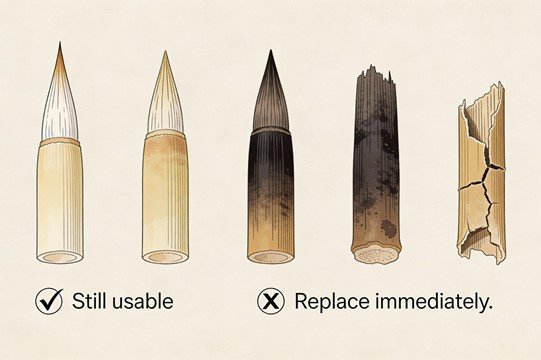
A well-maintained reed collection enables consistent tone, comfortable articulation, and manageable response throughout the full range.
Seasonal adjustments are especially important for wooden clarinets but beneficial for all instruments, as they affect pads, mechanisms, and overall instrument behavior.
Winter presents two main challenges: low humidity and rapid temperature shifts.
Winter recommendations:
Winter care goals: protect wood from excessive drying and temperature shocks that commonly cause body cracks.
Winter Storage Quick Reference:
|
Factor |
Action |
|
Heat Sources |
Keep 2+ meters away from radiators/heaters |
|
Temperature |
Maintain 18–22°C (64–72°F) if possible |
|
Humidity |
Aim for 45–55% RH; use humidifiers |
|
Case Time |
Allow 15–30 min adaptation after outdoor play |
|
Playing Duration |
Avoid extended sessions in cold conditions |
|
Condensation |
Dry more frequently than other seasons |
Summer typically brings over-humidity and overheating challenges.
Key measures:
Summer care goals: prevent overheating, mold formation, and excessive softening of pads and corks.
Seasonal Care Comparison:
|
Concern |
Winter Action |
Summer Action |
|
Humidity |
Increase (use humidifiers) |
Decrease (use absorbers) |
|
Temperature |
Avoid cold exposure |
Avoid heat/sunlight |
|
Storage |
Away from heat sources |
Away from sun, AC vents |
|
Playing |
Limit duration in cold |
Monitor for swelling |
|
Condensation |
More frequent drying |
Regular ventilation |
|
Pad Care |
Check for brittleness |
Check for softening |
Even perfect daily care becomes incomplete without proper storage and careful transportation practices.
Guidelines:
For extended storage (during performance breaks):
|
Storage Factor |
Recommendation |
|
Location |
Away from heat, AC, sun, humidity extremes |
|
Temperature |
Stable, 18–22°C (64–72°F) |
|
Humidity |
45–55% relative humidity |
|
Case Type |
Hard case for protection |
|
Position |
Assembled in the case, well-padded |
|
Duration Check |
Monthly inspection for long-term storage |
|
Long-term (3+ months) |
Use moisture absorbers, check monthly |
When traveling:
Proper transportation minimizes hidden damage risks that later manifest as cracks, loose mechanisms, and air-tightness problems.
Despite good care practices, occasional clarinet issues arise. It’s important to distinguish problems you can solve independently from those requiring professional expertise.
Typical warning signs:
If problems persist after reed changes, mouthpiece cleaning, and internal drying, the issue runs deeper, involving mechanics or air-tightness.
You can reasonably attempt:
Seek professional help immediately for:
Ideally, have your clarinet professionally inspected annually for preventive maintenance, even without obvious problems.
|
Problem |
DIY Solution Possible? |
Professional Needed? |
|
Squeaking/unstable notes |
Yes (try reed/clean first) |
If persists |
|
Dull tone |
Yes (clean, change reed) |
If unchanged |
|
Key noise/sticking |
Limited (oil lightly) |
Likely |
|
Visible cracks |
No |
Yes, immediately |
|
Pad issues |
No |
Yes |
|
Loss of intonation |
Partial (check reed/mouthpiece) |
If persistent |
Quality accessories amplify proper care benefits and enhance playing comfort.
Selection and maintenance:
Recommended Accessory Kit:
|
Item |
Purpose |
Replacement Frequency |
|
Swab |
Daily drying |
Every 1–2 years (if worn) |
|
Mouthpiece Brush |
Mouthpiece cleaning |
Every 2–3 years |
|
Cork Grease |
Tenon assembly |
As needed (1 tube lasts months) |
|
Key Oil |
Mechanical lubrication |
As needed (very minimal use) |
|
Reed Case |
Reed storage/protection |
Every 2–3 years |
|
Humidity Regulators |
Climate control |
Per manufacturer (typically 6–12 months) |
While general principles are universal, certain clarinet types have maintenance nuances
|
Clarinet Type |
Key Care Considerations |
|
Bb Clarinet |
Most common; standard care practices apply; ideal for developing care habits |
|
A Clarinet |
Similar to Bb; still needs regular maintenance despite infrequent orchestral use |
|
Eb Clarinet |
Compact with delicate parts; extra care during cleaning to avoid damage to small components |
|
Bass Clarinet |
Large instrument requiring reinforced case; careful transport; complex mechanism needs regular checks |
|
Contrabass Clarinet |
Extensive mechanical system; requires professional expertise for repairs |
|
Wooden Models |
Sensitive to humidity/temperature; need enhanced climate control; prone to cracking |
|
Plastic Models |
More resilient to environmental changes; pads and mechanisms still vulnerable to moisture |
A regular maintenance schedule prevents important tasks from being overlooked.
With hobbyist playing, pads typically last several years, though intensity of use, humidity levels, and care quality all affect lifespan. Professional heavy-use instruments usually receive preventive replacement or regulation every 1–2 years.
Potential causes: damaged or worn reed, dirty mouthpiece, internal condensation, leaking pads, or technique issues. First check the reed, mouthpiece, and instrument cleanliness; if problems persist, consult a technician.
No. Alcohol and harsh chemicals damage key finishes, body material, pads, and mouthpieces. Use only warm water, mild soap, and products specifically designed for woodwind instruments.
Always use a rigid protective case, ensuring internal parts have no excess movement. Avoid leaving cases in vehicles, direct sunlight, or drafty areas. When flying, carry the clarinet in your carry-on when possible.
Check the reed and mouthpiece first, verify cleanliness. If the problem persists, possible causes include leaking pads, body deformation, or mechanical issues. Professional diagnosis is recommended.
Replace reeds showing darkening, softness, poor response, visible cracks, chips, or uncontrolled squeaking.
Extended assembly storage isn’t ideal: pads and corks endure constant pressure, and drying is compromised. Disassemble after playing and store in the case for optimal preservation.
Target approximately 45–55% relative humidity. Lower levels cause wood to dry excessively and crack-risk increases; higher levels promote mold growth and wood/pad swelling.
Clarinet care isn’t a one-time activity but an integrated set of regular actions: from daily cleaning through seasonal adjustments to annual professional check-ups. Following fundamental principles—maintaining dryness, avoiding temperature extremes, handling mechanisms carefully, and using quality accessories—ensures your clarinet’s longevity and consistent, beautiful tone.
With conscientious care, your clarinet becomes a reliable partner for many years, allowing you to focus on the music rather than fighting equipment failures.
Music
Art
Dance
Yoga
Music
Voice
Theater
Dance
Art Classes
Music

Awarded as one of the best schools in Charlotte, NC

Exam preparation for Trinity College London and ABRSM

Music, Dance, and Art lessons all in one place

University-trained teachers with degrees only

Exclusive to our school: patented program School Of Little Talents

Preparation for future studies at Universities and Conservatories
Awarded as one of the best schools in Charlotte, NC
Exam preparation for Trinity College London and ABRSM
Music, Dance, and Art lessons all in one place
University-trained teachers with degrees only
Exclusive to our school: patented program School Of Little Talents
Preparation for future studies at Universities and Conservatories